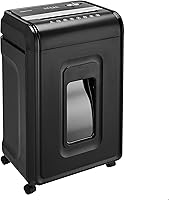
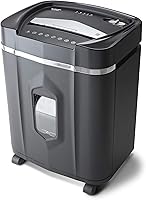
What Is a Cross-Cut Shredder and Who Needs One?
A cross-cut shredder slices paper into short pieces in two directions, making documents harder to read than strips from a strip-cut shredder. It suits homes and small offices that want added privacy for bills, forms, and routine records.
On this page (6 sections)
A cross-cut shredder cuts paper into short pieces in two directions, making documents harder to read than strips from a strip-cut shredder. It suits homes and small offices that want added privacy for bills, forms, and routine records.
The key choice is not just the cut style. Look at the security level, sheet capacity, run time, and the kinds of items each machine can shred.
What is a cross-cut shredder?
A cross-cut shredder cuts each sheet lengthwise and across, producing small rectangular pieces. That differs from a strip-cut shredder, which cuts paper into long ribbons.
The short pieces make it harder to reconstruct a document, though no shredder should be treated as a guarantee that discarded information can never be recovered. For most household decisions, compare the stated security level and cut size rather than relying on the words “cross-cut” alone.
For an overview of the machine’s parts and process, see how a paper shredder works.
Who needs a cross-cut shredder?
A cross-cut shredder can suit people who regularly dispose of paperwork with personal or financial details. That may include bank statements, bills, insurance forms, and documents with account numbers or addresses.
It can also fit a small office that handles routine confidential papers. Choose capacity and run time around the size of your shredding sessions, and check workplace rules if documents need a specific security level.
If you mostly shred junk mail without personal details, a strip-cut model may be enough. Our guide to cross-cut vs strip-cut shredders explains the trade-offs.
What do P-3 and P-4 mean?
P-3 and P-4 are security levels that describe the size of paper particles. A P-4 cross-cut shredder makes smaller pieces than a P-3 model, so it can be a better fit for documents that call for more privacy.
For example, the Amazon Basics 24-Sheet model is rated P-4 and cuts paper into pieces measuring 5/32 by 1-1/2 in. The Amazon Basics 12-Sheet model is rated P-3 and cuts pieces about 0.2 by 1.2 in.
A security label alone does not tell you whether a model meets a particular organization’s policy. Check that policy before shredding regulated or highly sensitive records.
How does cross-cut compare with micro-cut?
Cross-cut makes short strips or rectangles; micro-cut makes smaller particles. Micro-cut is often the better match when you need a higher security level, while cross-cut can be a practical choice for routine household paperwork.
The Bonsaii 12-Sheet Cross-Cut Heavy-Duty Shredder is rated P-4 and makes pieces measuring 5 by 25 mm. The Fellowes 14C10 is also rated P-4, with stated pieces of 5/32 by 1-9/16 in.
Those dimensions are not directly comparable without considering the full particle shape and security standard. Read micro-cut vs cross-cut shredder differences if you are weighing a finer cut.
What should you check before choosing one?
A good fit depends on how much you shred at a time and how long you need to run the machine. Compare sheet capacity, continuous run time, cool-down needs, bin size, and the rules for non-paper items.
How many sheets do you shred in one batch?
Match sheet capacity to your usual workload, not just your largest occasional stack. A higher capacity can reduce the number of passes, but follow the machine’s instructions and avoid forcing extra sheets into the feed.
The Fellowes 14C10 is rated for up to 14 sheets per pass and has a 10-minute continuous run time. It also has a 5-gallon pull-out bin and a safety lock.
How long can it run before cooling down?
Run time matters if you plan to clear a backlog in one sitting. A model with a short duty cycle may need frequent pauses, while a longer stated run time can handle a larger session before cooling.
The Bonsaii 12-Sheet model can run continuously for up to 15 minutes. The Amazon Basics 24-Sheet model supports 40 minutes on followed by 50 minutes off, with automatic shutoff if it runs beyond its maximum time.
Do you need to shred cards, staples, or clips?
Only feed other items when the model supports them. Some cross-cut shredders accept staples, paper clips, or credit cards, but supported items and feed slots vary.
The Amazon Basics 24-Sheet model can shred CDs, DVDs, credit cards one at a time through a dedicated slot, staples, and small paper clips. Amazon Basics warns against metallic credit cards.
See whether a paper shredder can shred credit cards and staples for more guidance.
Does bin size and placement matter?
A larger bin means fewer trips to empty it, but it also takes up more room. Measure the floor space and check whether you can pull the bin out easily where the shredder will sit.
The Amazon Basics 12-Sheet model has a 5-gallon bin and a 9-minute runtime followed by a 30-minute cool-down. It is rated P-3, so compare its security level with your needs before choosing it.
Is a cross-cut shredder right for your home office?
A cross-cut shredder is a sensible fit when you want more privacy than long paper strips provide and your paperwork does not require a finer cut. Choose P-4 if that level fits your records, then compare capacity and run time to your workload.
Choose a P-3 model if its stated security level meets your needs and a smaller batch capacity is enough. For model options, browse cross-cut paper shredders for home use or use the paper shredder buying guide to compare cut types and features.
Frequently asked questions
What does a cross-cut shredder do?
A cross-cut shredder cuts paper lengthwise and across, turning sheets into short pieces instead of long strips. That makes the original page harder to piece together by hand.
Check the security level and cut size for the documents you handle, since cross-cut models vary.
Is a cross-cut shredder secure enough for home use?
For many household records, a cross-cut shredder at P-4 security is a practical choice. It can suit bills, statements, and forms with personal details.
If you handle highly sensitive records, compare the security level required by your workplace or record-handling rules before choosing.
What is the difference between cross-cut and micro-cut shredders?
Cross-cut shredders make short rectangular pieces, while micro-cut models make smaller particles. Micro-cut can offer a higher security level, but the right choice depends on your document needs and how often you shred.
Compare cut size, security level, capacity, and run time.
Can a cross-cut shredder handle credit cards?
Some cross-cut shredders are designed to shred credit cards, but this varies by model. Check the manufacturer's instructions for the exact card types and feed method, and never assume that a paper slot can take a card.
Metal cards may be excluded.