Amazon Basics vs Fellowes Shredders for Home Offices: Which Is Better? (October 2026)
Choose Amazon Basics for larger batches and a longer stated run time, or Fellowes for a Safety Lock and the 14C10's quiet-operation feature. The right Amazon Basics vs Fellowes shredder depends on your workload, room and preferred safety features.
On this page (6 sections)
The Amazon Basics vs Fellowes shredder choice comes down to batch size, run time and safety features. Amazon Basics suits bigger paper sessions, while the Fellowes options suit deskside users who value a Safety Lock or the 14C10's quiet-operation feature.
All 3 models make P-4 cross-cut particles. The Amazon Basics model handles up to 24 sheets per pass, compared with 14 for the Fellowes 14C10 and 12 for the Fellowes Powershred.
If you shred only occasional household papers, any of these may fit. Your better match depends on how much you feed at once, how long you work before stopping, and where the bin and shredder will sit.

Amazon Basics vs Fellowes: which brand fits your workload?
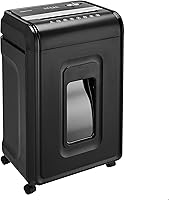
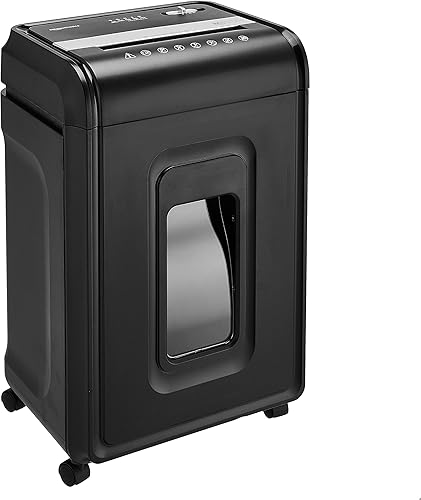
Amazon Basics has the highest sheet capacity and largest bin among these 3 models. It handles up to 24 sheets per pass and has a 7-gallon pull-out bin; both Fellowes models handle fewer sheets and have 5-gallon bins.
The Amazon Basics shredder has a stated cycle of 40 minutes on and 50 minutes off. It shuts off automatically if it runs past the maximum time to protect the motor from overheating.
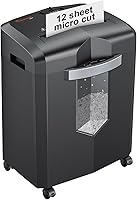
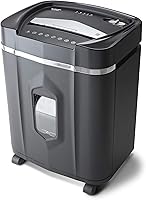
The Fellowes 14C10 runs for up to 10 minutes before a cool-down period, while the Powershred 12-Sheet runs for up to 20 minutes. Those differences matter when you want to clear a pile in one sitting.
Which amazon basics vs fellowes shredder handles bigger batches?
The Amazon Basics model is the clearest pick when you want to feed more sheets at a time. Its maximum is 24 sheets of 20-pound bond paper, compared with 14 for the 14C10 and 12 for the Powershred.
Treat the maximum as an upper limit, not a target for every feed. Thick, folded or misaligned paper can make feeding harder, so start below the limit if pages resist moving smoothly.
If you usually shred a few pages at a time, either Fellowes model may be enough. Higher capacity is most useful when you regularly work through mail, old statements or a home-office stack.
When does shredder run time matter most?
Run time matters when you have a backlog and want to finish it in one sitting. The Amazon Basics model has the longest stated cycle, and the 12-sheet Powershred falls between the Fellowes 14C10 and Amazon Basics.
A shorter session can work well for occasional paperwork. It may feel limiting if you need to shred repeatedly during a busy day or clear many folders at once.
For a large cleanup, plan around the model's stated run time and cool-down period. Stop when the cycle ends and let the shredder rest as directed instead of trying to push through more pages.
Which model fits a home office layout?
The Fellowes 14C10 is the smallest by its stated dimensions, while the Amazon Basics model includes casters. Measure the floor space and the path to the paper opening before you choose.
The 14C10 measures 9.69 in deep, 13.44 in wide and 19.69 in high. The Amazon Basics model measures 10.95 in deep, 14.76 in wide and 23.23 in high.
The Powershred 12-Sheet model measures 13.44 in deep, 9 in wide and 19.69 in high. Leave room to pull out its bin and access the controls.
Check the space around the shredder, especially if it will sit under a desk or in a shared room. A cabinet can fit beneath a desk yet still be awkward to use if the opening or bin is blocked.
How much emptying does each shredder need?
The Amazon Basics 7-gallon bin has more capacity than the 5-gallon bins on either Fellowes model. Its larger bin may mean fewer emptying breaks, though it takes more room when pulled out.
Empty the bin before the shreds pile up near the cutting area or become awkward to carry. Keep the bin properly seated and the door area clear so the machine can operate as intended.
Think about disposal before buying. Shredded paper may be treated differently from whole sheets by local recycling programs, so check your local rules if recycling is part of your routine.
Does noise affect the decision?
The Fellowes 14C10 has a quiet-operation feature, which may suit a shared room or a home office near living areas. There is no measured decibel comparison for these models in the product information.
If noise is a key concern, consider where you'll shred and when. The quiet paper shredder guide explains what to look for when comparing noise claims and measurements.
Room and desk placement also affect daily convenience. Our home office shredder guide covers workload, placement and storage choices for a personal work area.
Which safety and material features matter?
Choose a Fellowes model for its Safety Lock, or the Amazon Basics model for its dedicated slot for CDs, DVDs and eligible credit cards. Follow the specific manual before feeding anything besides paper.
Both Fellowes models have a patented Safety Lock that disables the shredder when needed. This feature is useful when you want to prevent operation while the machine is not in use, especially in a home where children or pets may be nearby.
The Amazon Basics model has a 4-mode switch for auto, off, reverse and forward, plus LED indicators for bin full, door open, overload, overheat and power. It also has anti-jam auto reverse.
Keep aerosol products away from the Amazon Basics shredder, and do not feed metallic credit cards into it. Its dedicated slot handles CDs, DVDs and credit cards, with credit cards limited to one at a time.
Can these shredders take staples and paper clips?
All 3 models are described as able to shred staples and paper clips. The Fellowes models also handle unopened junk mail, and their product information includes credit cards.
Do not assume that every card, mail insert or fastener is safe to feed. Check the manual for your model, and avoid forcing material that does not enter smoothly.
The Amazon Basics model has a dedicated media and card slot. The Fellowes descriptions do not specify a separate card slot, so use their manuals for the right feed method.
Are these cross-cut shredders secure enough?
All 3 models have a stated P-4 security level and use cross-cut particles. They share the same stated security level, so capacity and operating features are the main differences here.
P-4 may suit many household and home-office papers. If your workplace or records policy requires a particular destruction level, follow that rule when choosing.
Read our cross-cut shredder guide to understand how this cut style differs from strip-cut shredding. For more options by brand, see our guides to Amazon Basics paper shredders and Fellowes paper shredders.
How should you set up and care for a home shredder?
Set the shredder on a stable, accessible surface, seat the bin correctly and keep the paper opening clear. Good placement makes routine jobs easier and helps you notice a full bin or a warning light.
Before the first use, remove packaging, check the manual and confirm that the shredder head sits correctly on its bin or cabinet. Place it near the papers you need to destroy, but leave room to feed pages and pull out the bin.
Feed paper straight and in small, even stacks. Stay within the sheet limit, use the proper slot for cards or media when the model has one, and stop if pages bunch or the motor slows.
Clear jams with the controls and method described in the manual. The Amazon Basics model includes reverse and anti-jam auto reverse, but don't pull paper against moving cutters or use tools near the opening.
Regularly empty the bin and keep the area around the intake free of scraps. For more detailed upkeep, follow our paper shredder cleaning steps.
What common mistakes can shorten a shredding session?
The most common mistake is treating the maximum sheet count as the best feed size. A smaller, even stack is easier to guide and less likely to trigger an overload than a thick, crooked bundle.
Another mistake is ignoring the cool-down period. A shredder that stops after a long session needs time to rest; repeatedly switching it back on can interrupt the job and add strain.
Do not feed materials just because another model accepts them. Check the manual for cards, clips and mail, and keep aerosol products away from the Amazon Basics model.
Which amazon basics vs fellowes shredder should you choose?
Choose Amazon Basics for large batches and long cleanup sessions; choose Fellowes for the Safety Lock, with the 14C10 adding a quiet-operation feature. The 12-sheet Powershred is the Fellowes option with the longer stated run time.
Pick the Amazon Basics 24-Sheet Cross-Cut Shredder if you expect to shred large stacks, want the biggest bin here and have room for its larger cabinet. Its 24-sheet capacity and 40-minute on cycle fit a substantial home-office cleanup.
Pick the Fellowes 14C10 if you want a smaller footprint, Safety Lock and quiet-operation feature for shorter jobs. Pick the Fellowes Powershred 12-Sheet if you value a 20-minute run time and can work with its 12-sheet capacity.
For help comparing capacity, cut type and other features across more models, use our paper shredder buying guide. The right Amazon Basics vs Fellowes shredder is the one that fits your usual batch, available space and safety needs.
Product details
| Product | Best for | Sheets per pass | Run time | Bin | Our score |
|---|---|---|---|---|---|
| Amazon Basics 24-Sheet Cross-Cut Shredder | batch shredding | 24 | 40 minutes on, 50 minutes off | 7 gallons | 8.5 |
| Fellowes 14C10 14-Sheet Cross-Cut Shredder | shared rooms | 14 | 10 minutes | 5 gallons | 8.4 |
| Fellowes Powershred 12-Sheet Cross-Cut Shredder | longer jobs | 12 | 20 minutes | 5 gallons | 8.1 |
Frequently asked questions
Is Amazon Basics or Fellowes better for a home office?
Amazon Basics suits larger batches, with capacity for up to 24 sheets per pass and a 7-gallon bin. Fellowes suits buyers who want a Safety Lock or the 14C10's quiet-operation feature.
Choose based on your workload, available space and safety needs.
Which shredder has the longest run time?
The Amazon Basics model has the longest stated run time here, at 40 minutes on followed by 50 minutes off. The Fellowes 14C10 runs for up to 10 minutes, while the Powershred 12-Sheet runs for up to 20 minutes before a cool-down period.
Do these shredders use the same security level?
All 3 are cross-cut shredders with a stated P-4 security level. Their sheet capacity, bin size and operating features differ, but the security level is the same.
Choose P-4 if it matches the needs of the documents you plan to shred.
Can these shredders shred credit cards?
Both Fellowes models are described as able to shred credit cards. The Amazon Basics model can shred credit cards one at a time through a dedicated slot, but its instructions exclude metallic credit cards.
Check the manual before feeding items other than paper.
Which Fellowes shredder should I choose?
Choose the 14C10 for up to 14 sheets per pass and a stated 10-minute run time, or the 12-sheet Powershred for a stated 20-minute run time and 12 sheets per pass. Both have a Safety Lock, P-4 cross-cut and a 5-gallon pull-out bin.