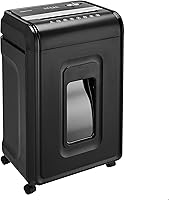
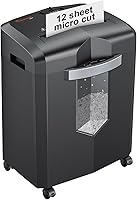
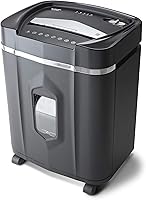
7 Best Heavy Duty Paper Shredders for Home Use (November 2026)
The best heavy duty paper shredders for home use include the Bonsaii 12-Sheet Cross Cut Paper Shredder (best overall for most homes), the Bonsaii 6-Sheet Cross Cut Paper Shredder for small desks and light loads, and the VidaTeco 14-Sheet Micro Cut Paper Shredder for long shredding sessions.
On this page (8 sections)
- Which heavy duty paper shredder suits your home?
- How these heavy duty shredders compare
- How we compared these shredders
- What sheet capacity do you need at home?
- How long do you need the shredder to run?
- Cross cut or micro cut for home documents?
- How much space and weight can you give up?
- Which heavy duty paper shredder for home use is the best buy?
The best heavy duty paper shredder for home use is the Bonsaii 12-Sheet Cross Cut. It meets P-4 security, runs six minutes without stopping and drops shreds into a 21-liter bin with a viewing window.
That covers a week of household paperwork without the bulk of an office machine. For a small desk, the compact Bonsaii 6-Sheet fits underneath and still cuts at P-4.
If you clear whole filing boxes in one sitting, the VidaTeco 14-Sheet runs for a full hour and cuts micro particles. The Amazon Basics 24-Sheet takes the largest stack per pass when volume is your main concern.
These are home machines that step up from a basic strip-cut unit. They handle staples and cards and run longer than budget models while still fitting a corner or a desk side.
If your needs are lighter, our roundup of the best paper shredders for everyday use starts at simpler machines.
Our picks at a glance
-
1
 Best overall for most homes
Bonsaii 12-Sheet Cross Cut Paper Shredder
9.7/10 our score
See it on Amazon -
2
 Best for small desks and light loads
Bonsaii 6-Sheet Cross Cut Paper Shredder
9.6/10 our score
See it on Amazon -
3
 Best for long shredding sessions
VidaTeco 14-Sheet Micro Cut Paper Shredder
9.1/10 our score
See it on Amazon
- 4
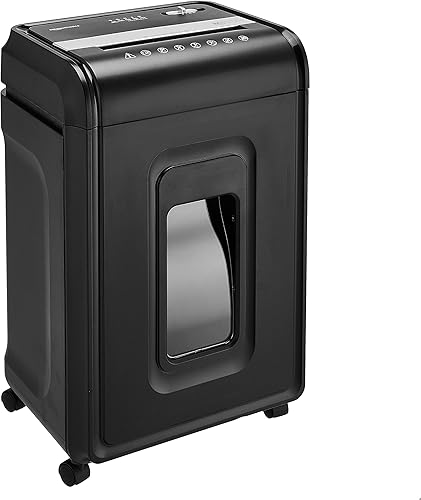 Check it
Amazon Basics 24-Sheet Cross-Cut Shredder
Best for the biggest stacks - 5
 Check it
Fellowes Powershred 79Ci 16-Sheet Jam-Proof Shredder
Best for shared home offices - 6
 Check it
Bonsen 20-Sheet Cross-Cut P-4 Shredder
Best for high-volume weekly shredding - 7
 Check it
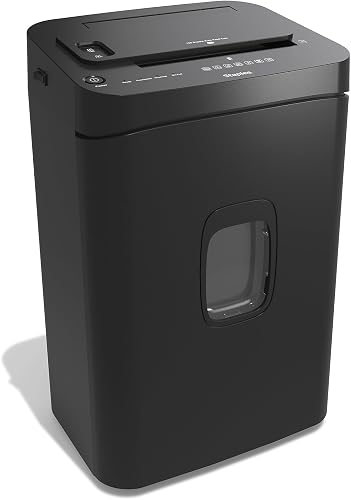
Staples 150-Sheet Auto-Feed Micro-Cut Shredder
Best for unattended bulk shredding
Which heavy duty paper shredder suits your home?
The right pick comes down to how much you shred at once and how long you want to stand there. A home office clearing monthly statements has different needs from a household that shreds a few envelopes a day.
Start with sheet count and run time, then match the cut type to how sensitive your papers are. The other split is manual versus auto-feed.
Six of these machines ask you to feed pages by hand, which keeps them small and gives you control over what goes in. The Staples model takes a stack and works through it alone, and that convenience costs floor space and weight.
Bonsaii 12-Sheet Cross Cut Paper Shredder: Best overall for most homes
- 12 sheets per pass
- P-4 cross cut
- 6 minutes on
- 21-liter bin with window
A balanced home shredder with P-4 security, a six-minute run time and a bin big enough to skip daily emptying.
Pros
- Shreds staples and credit cards
- Automatic jam reverse
- Head stops when lifted
Cons
- Needs a 40-minute cool-down
- No casters
Bonsaii's 12-sheet model is the safest all-round buy for a home that shreds regularly. It takes 12 sheets per pass and cuts them into 5 x 20 mm particles at P-4 security, so bank statements and account letters come out unrecoverable.
The six-minute run time comes from a patented cooling system. That is enough for a typical week of mail, a few statements and some old receipts in one sitting.
After that it needs about 40 minutes to cool, so plan longer clear-outs in batches. A four-mode switch gives you forward and reverse for clearing a jam.
A 21-liter bin with a clear window means you can see when it's full instead of guessing. The head has a portable handle and stops when lifted, which adds a safety layer around kids and pets.
It weighs 12 lb and measures 12.6 x 7.91 x 18.3 inches, so it sits in a corner or under a desk. The trade-off is the cool-down and no casters: you'll move it by hand.
For most homes that's a fair swap for the size and simplicity.
Bonsaii 6-Sheet Cross Cut Paper Shredder: Best for small desks and light loads
- 6 sheets per pass
- P-4 cross cut
- 3.4-gallon bin
- 70 dB operation
A compact, affordable shredder for a home desk that fits under most work surfaces and still meets P-4 security.
Pros
- Fits under a desk
- Handles staples and cards
- Quiet at 70 dB
Cons
- Only 4 minutes on
- 6-sheet limit per pass
The smaller Bonsaii 6-sheet suits a desk in a spare room or a home office where space is tight. It measures about 11.81 x 7.09 x 14.26 inches and weighs 6.6 lb, so it tucks under most work surfaces and lifts easily when you need to empty it.
It still cuts at P-4 into 5 x 14 mm particles and handles staples, paper clips and a credit card one at a time. The separate 3.4-gallon bin has a clear window, so you can check fill level without pulling the head off.
The run time is 4 minutes with a 20-minute cool-down. That fits daily mail, envelopes and a few statements, not a filing box.
Bonsaii rates it at a quiet 70 dB, which matters if the desk sits near a living area. An overheat indicator tells you when to pause.
Its limits are honest ones: a 6-sheet pass and a short cycle. Choose it when your shredding is steady but small, and step up to the 12-sheet model when you regularly face a stack taller than your hand.
VidaTeco 14-Sheet Micro Cut Paper Shredder: Best for long shredding sessions
- 14 sheets per pass
- P-4 micro cut
- 60 minutes on
- 5.3-gallon bin
The strongest runner for bulk shredding, with a full hour of run time and the smallest cut particles in this group.
Pros
- 60 minutes continuous
- Quiet at 58 dB
- Rolling casters
Cons
- Heavier at 19.4 lb
- Wider footprint
The VidaTeco 14-sheet is the pick when you shred in long sessions. Its 60-minute continuous run time means you can clear a full filing box, tax documents or a bag of junk mail without stopping to wait for a cool-down.
It cuts into 4 x 12 mm micro particles, the smallest in this group, and still meets P-4. It also takes CDs and credit cards alongside paper.
At 58 dB it's the quietest machine here, which helps in a shared workspace. Its metal housing adds to the sturdy feel.
The 5.3-gallon pull-out bin holds over 400 sheets of shredded A4, so emptying is less frequent. Four casters let you roll it out of the way.
An auto-reverse anti-jam system and a bin-full sensor round out the controls. Its trade-offs are size and weight: 19.4 lb and a footprint of 9.4 x 13.6 x 20.6 inches, which is more machine than a light user needs.
If you shred often and hate waiting, the long run time is worth the floor space. For smaller jobs, a lighter micro cut shredder for home use may suit you better.
Amazon Basics 24-Sheet Cross-Cut Shredder: Best for the biggest stacks
- 24 sheets per pass
- P-4 cross cut
- 40 minutes on
- 7-gallon pull-out bin
The highest sheet count here, with a pull-out bin and casters that suit a home office producing steady paper volume.
Pros
- 24 sheets per pass
- 7-gallon pull-out bin
- Castors for moving
Cons
- 31.6 lb
- 40 minutes on, 50 off
The Amazon Basics 24-sheet is the machine for the biggest stacks. It takes 24 sheets per pass of 20-pound bond paper and cuts at P-4 into 5/32 x 1-1/2 inch pieces.
That's the highest sheet count here and enough for a full in-tray in a couple of passes. It runs 40 minutes on and 50 minutes off.
An auto-reverse function clears jams and a four-mode switch gives you forward and reverse when you need them. LED indicators show bin full, door open, overload and overheat, and the 8.7-inch paper entry takes wide documents without folding.
The 7-gallon pull-out bin and included casters make a difference in a home office that produces steady volume. It also handles CDs, DVDs, credit cards and staples through a dedicated slot.
Amazon Basics warns against metallic cards and aerosols near the unit. This is the heaviest machine in the group at 31.6 lb, so it needs a firm spot with room to roll it out.
Choose it when volume matters more than fitting a small corner. For a lighter routine, the smaller Bonsaii machines stay easier to live with.
Fellowes Powershred 79Ci 16-Sheet Jam-Proof Shredder: Best for shared home offices
- 16 sheets per pass
- P-4 cross cut
- 20 minutes on
- SafeSense protection
A quieter, jam-resistant pick for a home office with more than one user, with a hand-sensing safety feature.
Pros
- SafeSense hand protection
- Jam-proof detection
- 6-gallon pull-out bin
Cons
- 20-minute run time
- 64 dB
The Fellowes 79Ci suits a home office shared by more than one person. It takes 16 sheets per pass at P-4 and its SafeSense technology disables the machine when hands or paws touch the paper opening, which is a useful safeguard in a busy room.
Fellowes calls it 100% jam-proof. It detects tough jobs and powers through them, so you spend less time reversing a stuck sheet.
The 6-gallon pull-out bin has an LED full indicator. The run time is 20 minutes, less than the VidaTeco and Bonsen machines but more than the small Bonsaii, and at 64 dB it's quiet for its class.
A 2-year product warranty and a lifetime cutter warranty back it up. It also destroys CDs and DVDs as well as cards and staples.
The trade-off is capacity: 16 sheets per pass and a 6-gallon bin put it below the bigger models for volume. Pick it when two or more people share the shredder and safety features matter, while a single user with lighter needs gets more value from the 12-sheet Bonsaii.
Bonsen 20-Sheet Cross-Cut P-4 Shredder: Best for high-volume weekly shredding
- 20 sheets per pass
- P-4 cross cut
- 60 minutes on
- 6.6-gallon bin
A 20-sheet machine with a long run time and a large bin, built for households that shred a lot in one sitting.
Pros
- 60 minutes continuous
- 20 sheets per pass
- 520-sheet bin
Cons
- Needs monthly oiling
- Needs monthly oiling
The Bonsen 20-sheet is built for households that shred a lot in one sitting. It takes 20 sheets per pass and runs for more than 60 minutes on its cooling system.
Its P-4 cut produces 13/64 x 63/64 inch particles, smaller than standard cross cut. The 6.6-gallon bin holds 520 sheets, so emptying is rare.
A nitrided steel cutter and an anti-jam system handle staples, paper clips and cards. Bonsen rates it at 60 dB or less, and casters make it easy to wheel to the curb on recycling day.
Its build is the trade-off. Thicker material makes it heavier than the smaller Bonsaii models and it takes more room on the floor.
Bonsen asks you to keep passes to 18 sheets and to oil once or twice a month, so feed it a little under its rated count for smooth running. Choose it when weekly shredding is genuinely high and you want long runs between cool-downs, while for a normal household pace the Bonsaii 12-sheet is easier to place and simpler to use.
Staples 150-Sheet Auto-Feed Micro-Cut Shredder: Best for unattended bulk shredding
- 150-sheet auto-feed
- P-4 micro cut
- 7.4-gallon bin
- 65 dB operation
The only auto-feed model here, which loads a whole stack and works through it without you standing over the machine.
Pros
- 150-sheet top-load tray
- Micro-cut security
- 7.4-gallon pull-out bin
Cons
- 29.5 lb
- Large footprint
The Staples 150-sheet is the only auto-feed model here. Load up to 150 sheets into the top-load tray and it pulls them through on its own, which suits someone clearing a box of old files while doing something else.
It cuts micro particles at P-4, 4.3 x 12 mm, and runs at 65 dB. The 7.4-gallon pull-out bin reduces emptying and LED indicators show readiness and bin status.
Auto start and stop, auto reverse and overload protection are all included. It also takes cards, staples and small paper clips.
Staples rates the throughput at about 7 feet of paper per minute. That's steady rather than fast, but the point is that you don't stand there feeding it.
The trade-off is size and weight: 29.5 lb and a 25.19-inch width need a dedicated spot. Pick it when bulk paperwork piles up and you want the machine to do the feeding, while a manual-feed machine like the Bonsaii 12-sheet gives you more control per page and takes less room.
Our guide to choosing a paper shredder for a home office covers matching the machine to your desk setup.
How these heavy duty shredders compare
Sheet count decides how many passes you make and run time decides how long you wait between them. The table lines up the specs that matter most for home use.
Our score weighs specs, features and the fit with what a home shredder buyer wants.
| Product | Best for | Sheet capacity | Cut type | Bin capacity | Our score |
|---|---|---|---|---|---|
| Bonsaii 12-Sheet Cross Cut Paper Shredder | overall for most homes | 12 | Cross cut | 21 liters | 9.7 |
| Bonsaii 6-Sheet Cross Cut Paper Shredder | small desks and light loads | 6 | Cross cut | 3.4 gallons | 9.6 |
| VidaTeco 14-Sheet Micro Cut Paper Shredder | long shredding sessions | 14 | Micro cut | 5.3 gallons | 9.1 |
| Amazon Basics 24-Sheet Cross-Cut Shredder | the biggest stacks | 24 | Cross cut | 7 gallons | 8.5 |
| Fellowes Powershred 79Ci 16-Sheet Jam-Proof Shredder | shared home offices | 16 | Cross cut | 6 gallons | 8.3 |
| Bonsen 20-Sheet Cross-Cut P-4 Shredder | high-volume weekly shredding | 20 | Cross cut | 6.6 gallons | 7.6 |
| Staples 150-Sheet Auto-Feed Micro-Cut Shredder | unattended bulk shredding | 150 | Micro cut | 7.4 gallons | 7.5 |
How we compared these shredders
We checked the specs for each machine and compared them against what a home user actually needs. Sheet capacity, run time, bin size, cut type and footprint carried the most weight.
We also looked at the features that reduce daily friction: auto-reverse for jams, bin-full indicators, pull-out bins, casters and safety shut-offs. P-4 security was a baseline requirement for every pick.
The score reflects how well each machine matches frequent home shredding without a commercial footprint. Machines that run longer, cut smaller and empty less often scored higher.
Weight and footprint counted against a pick when they make it hard to place in a home. We also noted the cool-down each model needs, since a long run paired with a long rest is less useful than it first looks.
What sheet capacity do you need at home?
Most homes do fine with 12 to 16 sheets per pass. Choose 20 to 24 sheets only if you clear whole files or a filing box in one go.
A 6-sheet machine handles daily mail and a few statements. The jump to 12 sheets means fewer passes on a typical week's paperwork, and above 20 sheets you're buying for bulk clear-outs rather than routine use.
When a small pass count is enough
Daily envelopes, receipts and a couple of statements fit a 6-sheet machine. That's the compact Bonsaii here.
It's lighter and easier to hide under a desk. It also costs less to replace when a household's needs change.
When to step up to 20 sheets or more
If you shred bank statements in batches or clear old tax files each spring, go to 20 or 24 sheets. The Amazon Basics 24-sheet and Bonsen 20-sheet handle those sessions with fewer reloads.
Mixed material like cards and staples counts against the rated number, so leave headroom.
How long do you need the shredder to run?
Four to six minutes covers a typical home session. Pick 40 to 60 minutes only when you shred large batches regularly.
Run time is the spec most people overlook. A short cycle means stopping and waiting while the motor cools, and a long cycle lets you finish the job in one sitting.
The cool-down matters as much as the run time: after six minutes on, the Bonsaii 12-sheet needs about 40 minutes off.
Short runs for everyday paper
A 4 to 6 minute cycle suits daily mail and weekly statements. The two Bonsaii machines here fit that pattern.
You'll rarely hit the limit unless you let paperwork build up. Their overheat protection shuts the motor off rather than letting it strain.
Long runs for bulk sessions
The VidaTeco and Bonsen machines run for 60 minutes and the Amazon Basics for 40. Those suit tax season, moving house or clearing years of files in one afternoon.
A longer run also means fewer interruptions on a shared machine, so the run time matters more when several people feed it.
Cross cut or micro cut for home documents?
Cross cut covers most household paper. Choose micro cut when your documents carry account numbers or medical details.
Both cut types meet P-4 when the maker labels them so. The difference is particle size.
Cross cut leaves larger confetti-like pieces. Micro cut reduces them further, which makes reconstruction harder.
Our roundup of cross cut paper shredder for home use picks the best of that type.
When cross cut is the practical choice
Cross cut machines are usually cheaper and faster per pass. The Bonsaii 12-sheet and Amazon Basics 24-sheet both cut at P-4.
That's enough for bills, junk mail and routine office paper.
When micro cut earns its price
Micro cut gives extra protection for bank statements, medical records and anything with an account number. The VidaTeco and Staples machines cut micro particles and stay at P-4.
The smaller pieces also fill the bin faster, so a larger bin helps. Micro cut machines often run quieter, which is a bonus in a shared room.
How much space and weight can you give up?
Most home shredders fit under a desk or in a corner. Auto-feed and high-capacity models need a dedicated spot and a firm floor.
Check the dimensions before you buy. The compact Bonsaii 6-sheet measures about 11.81 x 7.09 x 14.26 inches and weighs 6.6 lb.
The Amazon Basics 24-sheet is 31.6 lb and the Staples auto-feed is 29.5 lb with a 25.19-inch width. Casters on the VidaTeco and Amazon Basics help you move them for cleaning, and the Bonsen's thick build also makes it heavier than its size suggests.
Machines for a desk or small corner
The Bonsaii 6-sheet and 12-sheet models suit tight spaces. Their heads lift off for emptying and they fit beside a desk without blocking a walkway.
Both use a separate bin you lift away, so there is no drawer to slide out.
Machines that need their own spot
The Staples auto-feed, the Amazon Basics and the Bonsen machines want floor space and clearance to open the bin. Plan for a spot near an outlet where you can roll or lift the unit out.
Leave room for the head to come off when you empty it.
Which heavy duty paper shredder for home use is the best buy?
The Bonsaii 12-Sheet Cross Cut is the best heavy duty paper shredder for home use for most people. It balances P-4 security, a six-minute run and a 21-liter bin in a size that fits a corner.
That covers routine household shredding without the cool-down waits or bulk of an office machine. Choose the VidaTeco 14-Sheet if you shred in long sessions and want an hour of running plus micro-cut security, or the Amazon Basics 24-Sheet for the biggest stacks and a pull-out bin.
For a small desk, the Bonsaii 6-Sheet stays compact and still meets P-4. If two or more people share the machine, the Fellowes 79Ci adds hand-sensing safety and jam detection, while for high weekly volume the Bonsen 20-Sheet runs long and holds 520 sheets.
The Staples 150-Sheet auto-feed suits unattended bulk work. Whichever you choose, oil the cutters monthly and keep passes a little under the rated count for smooth running.
Our top 3 picks at a glance
-
1
Best overall for most homes
Bonsaii 12-Sheet Cross Cut Paper Shredder
9.7/10 our score
See it on Amazon -
2
Best for small desks and light loads
Bonsaii 6-Sheet Cross Cut Paper Shredder
9.6/10 our score
See it on Amazon -
3
Best for long shredding sessions
VidaTeco 14-Sheet Micro Cut Paper Shredder
9.1/10 our score
See it on Amazon
Frequently asked questions
How many sheets should a home shredder take at once?
Twelve sheets per pass covers most household paperwork. Pick 20 to 24 sheets if you regularly clear whole files in one sitting, or 6 to 8 if you mostly shred a few envelopes and statements at a time.
The rated count assumes fresh 20-pound bond paper.
Is cross cut or micro cut better for home use?
Cross cut is fine for most homes and costs less. Micro cut gives smaller particles and higher protection for bank statements, medical records and anything with account numbers.
Both meet P-4 when the manufacturer labels them so, so choose by how sensitive your papers are.
How long can these shredders run before cooling down?
Run times in this group range from 4 minutes to 60 minutes, with cool-down periods from 20 to 50 minutes. The longer-running machines suit a full filing box in one go.
Shorter runs are fine for daily mail and statements, as long as you stop when the unit signals overheating.
Do heavy duty home shredders need oiling?
Yes. Lubricate the cutters once or twice a month with shredder oil or lubricating sheets to keep the blades sharp and reduce jams.
Check the manual for the method your model recommends.
Regular oiling matters more on machines you run for long stretches.
Can a home shredder handle credit cards and staples?
Most models here shred staples, paper clips and credit cards, usually one card at a time through a dedicated slot. Check the rated sheet count drops when you feed mixed material.
Metallic cards and CDs should go in only when the model lists them.